
Even experienced short-term rental hosts are caught off guard by licensing requirements more often than you might expect. In some markets, roughly 40% of hosts are actually operating in full compliance, which means the majority are exposed to fines, delisting, or enforcement actions without even realizing it. The requirements are spread across city websites, county portals, and state statutes, and they change frequently. This guide breaks down what a rental license actually is, what documentation you need, how much it costs, and why your specific location shapes every single rule you must follow.
Table of Contents
- The basics: what is a rental license and why does it matter?
- Core documentation: what most cities and counties require
- License fees, renewals, and processing: what to expect
- How requirements vary by state and city
- Our take: why smart compliance is an opportunity, not just a chore
- Simplifying compliance: how STR Comply can help
- Frequently asked questions
Key Takeaways
| Point | Details |
|---|---|
| License definition clarified | A rental license is official local permission needed for legal short-term rental operation. |
| Document requirements | Hosts must provide ownership proof, insurance, safety inspection results, and often local contacts. |
| Renewal and fees | Annual renewal of rental licenses is common, with fees usually from $200 to $500 and 30-90 day processing. |
| Location-based differences | State and city rules can be radically different, so always confirm with local authorities. |
| Proactive compliance advantages | Staying compliant protects hosts from surprise enforcement and helps them stand out in a competitive market. |
The basics: what is a rental license and why does it matter?
A short-term rental (STR) license is official permission granted by a city or county government to operate a property as a rental for periods of fewer than 30 consecutive nights. Without it, you are not legally authorized to host guests, regardless of whether your listing is active on any booking platform.
Many hosts confuse licenses, permits, and registrations. These are not the same thing.
- Rental license: An ongoing authorization to operate commercially as a short-term rental. Typically renewed annually.
- Permit: A one-time or project-specific authorization, often tied to construction, zoning approval, or a specific use change.
- Registration: A simpler administrative record with the city or county, often required as a first step before a full license is issued. You can explore the differences in more detail in this rental registration explained overview.
Understanding the distinction matters because some jurisdictions require all three, while others only require one. Mixing them up leads to incomplete applications and delays.
“Operating a short-term rental without the required license can result in fines, mandatory shutdowns, and removal from booking platforms — consequences that can eliminate months of rental income in a matter of days.”
The consequences of operating without a valid license are serious. Cities have the authority to issue citations, pursue legal action, and demand back taxes. Booking platforms have also increased cooperation with local enforcement agencies, meaning your listing can be flagged and taken down automatically if your license number is missing or invalid. Beyond fines and delisting, unlicensed hosts face reputational damage and complications with their liability insurance policies.
Licenses must also remain current and visible. Per local licensing standards, your license number must be displayed directly in your rental listing and be accessible to inspectors on the property. Annual renewal is required in nearly all jurisdictions, with fees ranging from $200 to $500 or more, and processing times of 30 to 90 days.
Staying licensed is not a one-time task. It requires ongoing attention to renewal cycles, any changes to local ordinances, and updates to your listing.
Core documentation: what most cities and counties require
With the importance of licensing established, the next step is understanding exactly what you need to gather before you apply. Most U.S. cities and counties have developed similar checklists, though the specifics vary. Preparing your documents in advance dramatically reduces the chance of delays or rejections.
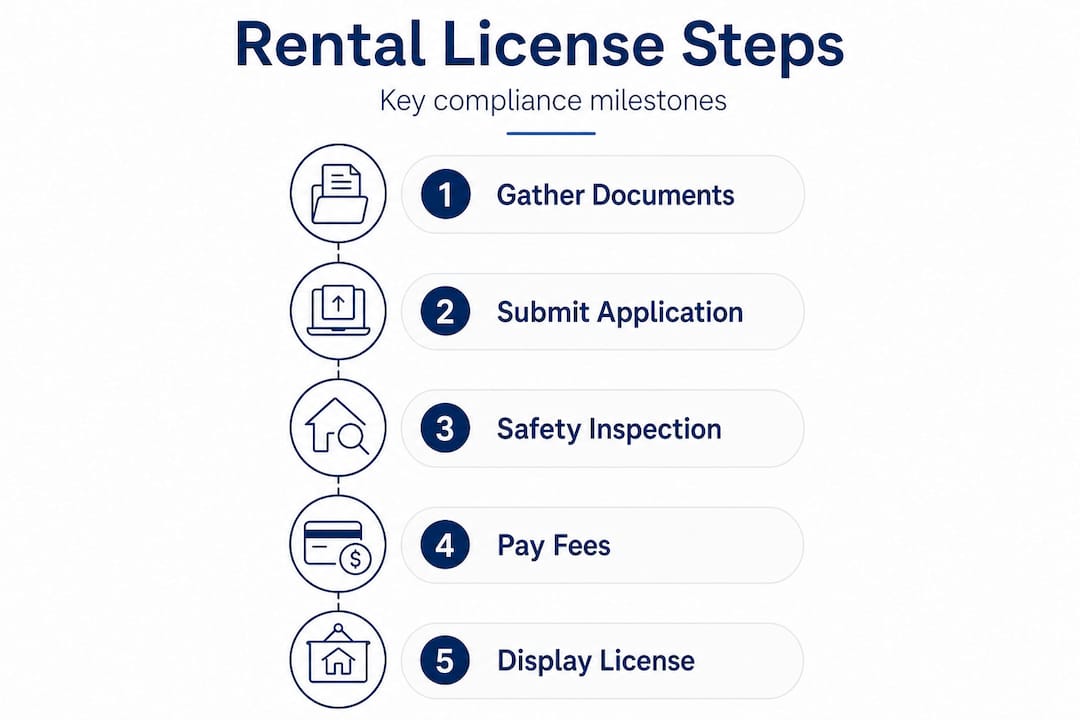
According to the Santa Fe short-term rental ordinance, common application requirements include proof of ownership, liability insurance with a minimum coverage of $1 million, a local 24/7 contact person, floor plans of the rental unit, fire safety equipment documentation, neighbor notification proof, and HOA approval if applicable.
Here is a step-by-step breakdown of what to prepare:
- Proof of ownership: A deed, property tax statement, or mortgage document showing you own or control the property.
- Government-issued ID: Required to confirm the identity of the applicant.
- Liability insurance certificate: Most jurisdictions require a minimum of $1 million in general liability coverage. Some cities specify STR-specific policies.
- Designated local contact: A person available 24 hours a day, 7 days a week to respond to complaints or emergencies. This can be you, a property manager, or a licensed third party.
- Floor plans: A basic diagram of the property showing rooms, exits, and square footage.
- Safety equipment documentation: Evidence of working smoke detectors, carbon monoxide detectors, and fire extinguishers. Some cities require a formal fire inspection.
- Neighbor notification proof: Some cities require you to formally notify adjacent property owners before your license is issued.
- HOA approval letter: If your property is in a homeowners association, you may need written confirmation that STR operations are permitted.
| Document | Commonly required | Notes |
|---|---|---|
| Proof of ownership | Yes | Deed or tax statement |
| Liability insurance | Yes | Minimum $1M coverage typical |
| Local 24/7 contact | Yes | Must be reachable at all times |
| Floor plan | Often | Required in most major cities |
| Fire inspection | Often | Equipment must be functional |
| Neighbor notification | Sometimes | City-specific requirement |
| HOA approval | If applicable | Required before license is issued |
Pro Tip: Two of the most common reasons STR license applications are delayed are missing HOA approval letters and incomplete neighbor notification records. Before submitting your application, download the specific checklist from your city’s website and verify every item individually.
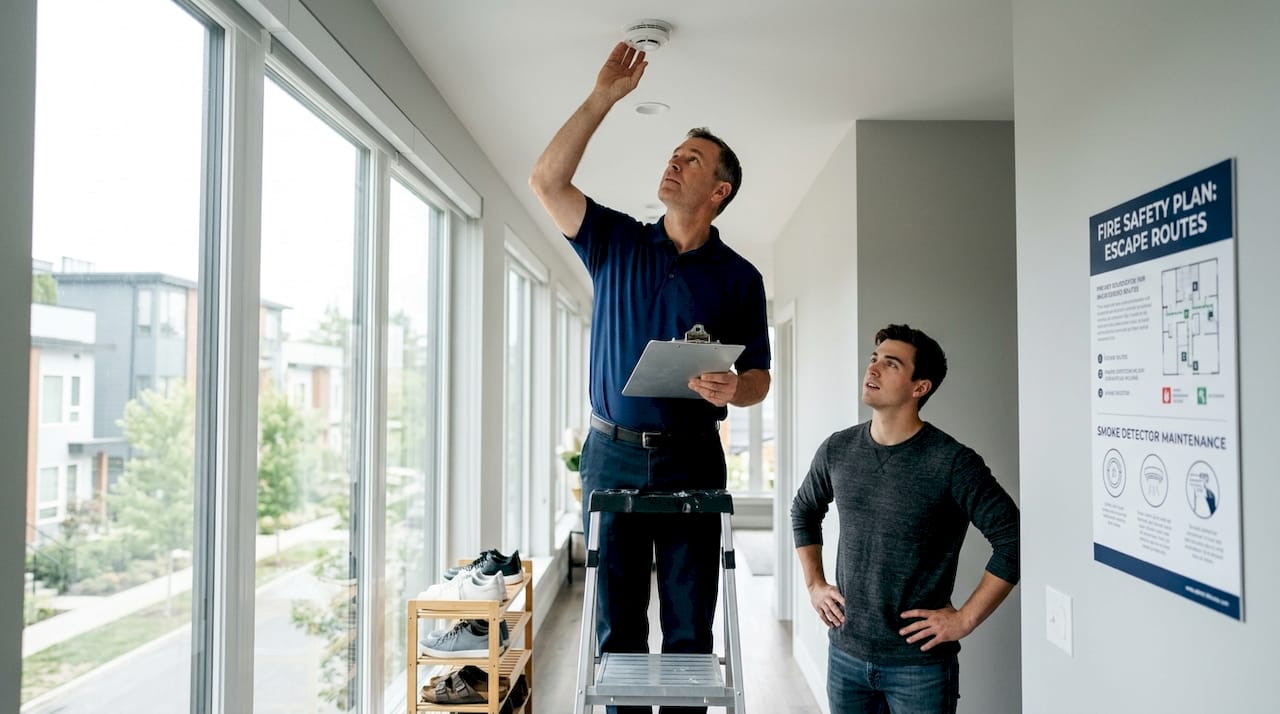
You should also prepare for an on-site safety inspection. Many jurisdictions send an inspector to confirm that your listed safety features are actually in place. Review the full scope of what those visits cover in this inspection rules summary for U.S. hosts.
License fees, renewals, and processing: what to expect
Once you know what documents to gather, the next question is how much the process will cost and how long it will take. Both factors directly affect when you can legally begin hosting or resume operations.
According to city licensing requirements, STR license fees typically range from $200 to $500 or more, with annual renewal required and processing times of 30 to 90 days after a complete application is submitted.
Fee structures vary by jurisdiction. Some cities charge a flat fee regardless of property type. Others use tiered pricing based on the number of bedrooms, the unit type (single-family vs. condo), or the number of nights you plan to rent per year. A few markets also charge additional fees for inspections, zoning reviews, or administrative processing on top of the base license fee.
| Fee type | Typical range | Notes |
|---|---|---|
| Base license fee | $200 to $500+ | Annual, varies by city |
| Inspection fee | $50 to $150 | Charged separately in some cities |
| Renewal fee | Similar to initial fee | Usually slightly lower after first year |
| Late renewal penalty | $50 to $200+ | Applied if renewal is missed |
Processing time is one of the most overlooked factors in STR planning. A 30 to 90-day window means that if you purchase a property in January with plans to launch in March, you may miss your first peak season if your application is incomplete or delayed. Always submit your application as early as possible.
If your license is delayed, most cities will not allow you to host guests in the interim. You cannot legally operate with a pending application unless the city explicitly offers a provisional authorization. Contact the licensing office directly to ask about timeline expectations once you have submitted.
- Apply as early as possible, especially in high-demand markets where processing offices are backlogged.
- Set a renewal reminder 60 to 90 days before your license expiration date.
- Keep copies of all submitted documents in case the city requests verification during renewal.
- Confirm your renewal requirements each year, as cities sometimes update fee schedules or add new compliance checkpoints.
For a complete look at how renewals work and what triggers a re-inspection, review this permit renewal guide for short-term rental hosts.
How requirements vary by state and city
Costs and documents are only part of the picture. Where your property is located determines the full scope of what you are legally required to do, and the range of requirements across the United States is significant.
Vacation rental regulations by state show a clear divide between host-friendly and host-restrictive jurisdictions. States like Florida and Arizona have enacted preemption laws that prevent individual cities from banning STRs outright. In these states, hosts generally face fewer restrictions on investment properties, night caps, or residency requirements.
On the other end of the spectrum, many California cities have enacted primary residence requirements, meaning you can only rent out your primary home, not a second investment property. Several cities in that state also impose night caps, limiting the total number of nights per year a property can be rented. New York City has some of the most restrictive rules in the country, effectively prohibiting most whole-unit STR rentals.
“Tighter regulations in 2026 are reducing illegal competition, raising the operational value of fully licensed and compliant short-term rentals in contested markets.” Short-term rental regulations 2026
The regulatory landscape in 2026 is tightening in many markets. Cities that previously had no licensing requirements are introducing them. Cities with licensing are adding inspection layers and tougher renewal standards. For compliant hosts, this is actually a competitive advantage: fewer illegal operators means reduced supply and stronger occupancy rates for those who have done the work.
Pro Tip: Always check both the city and the county rules for your property’s location. In unincorporated areas especially, the county may have its own STR ordinance that applies independently of any city rules. One jurisdiction may be significantly stricter than the other.
Key regulatory categories to check by location:
- Primary residence requirement: Are you required to live on the property or nearby?
- Night caps: Is there a maximum number of rental nights per year?
- Density limits: Does your city cap the number of licensed STRs per block or neighborhood?
- Zoning restrictions: Is STR operation permitted in your specific zoning district?
- Tax registration: Are you registered to collect and remit transient occupancy tax or local lodging taxes? See the full breakdown in this tax obligations for hosts guide.
Our take: why smart compliance is an opportunity, not just a chore
Here is the reality that most compliance articles skip: the hosts who treat licensing as a burden are the same ones who get caught flat-footed by enforcement. The hosts who treat it as a business standard are the ones building durable, profitable rental operations.
As 2026 regulations tighten, the market is doing something unexpected: it is rewarding compliant operators. When cities crack down and remove unlicensed listings from platforms, the remaining inventory shrinks and demand stays the same. Compliant hosts benefit directly from reduced competition. Your occupancy rate goes up. Your pricing power increases. That is a real, measurable advantage for hosts who have their paperwork in order.
There is also a trust dimension that hosts underestimate. Booking platforms increasingly surface license numbers, inspection status, and compliance signals in search results. Guests notice. A listing with a valid license number, documented safety equipment, and verified local contact projects professionalism. That kind of credibility influences booking decisions, especially among business travelers and families, who are higher-value guest segments.
Our recommendation: document your compliance process thoroughly. Keep a digital folder with your license, insurance certificate, inspection records, and renewal history. This does not just prepare you for a city audit. It positions you to pitch yourself credibly as a professional property manager to owners looking for someone to manage their STR assets.
The benefits of full compliance are concrete and worth listing directly:
- Peace of mind: No risk of surprise enforcement actions, fines, or forced shutdowns.
- Platform ranking: Platforms favor verified, licensed listings in search placement.
- Guest trust: Documented compliance signals professionalism and safety to high-value guests.
- Regulatory resilience: When rules change, you already have the infrastructure to adapt quickly.
- Competitive edge: In markets where enforcement is increasing, being licensed means you stay active when others are removed.
For more insights on staying ahead of regulatory changes, explore the compliance insights available to STR hosts and managers.
Simplifying compliance: how STR Comply can help
Understanding what is required is the first step. Staying current with every local rule across one or multiple properties is where the real challenge begins.
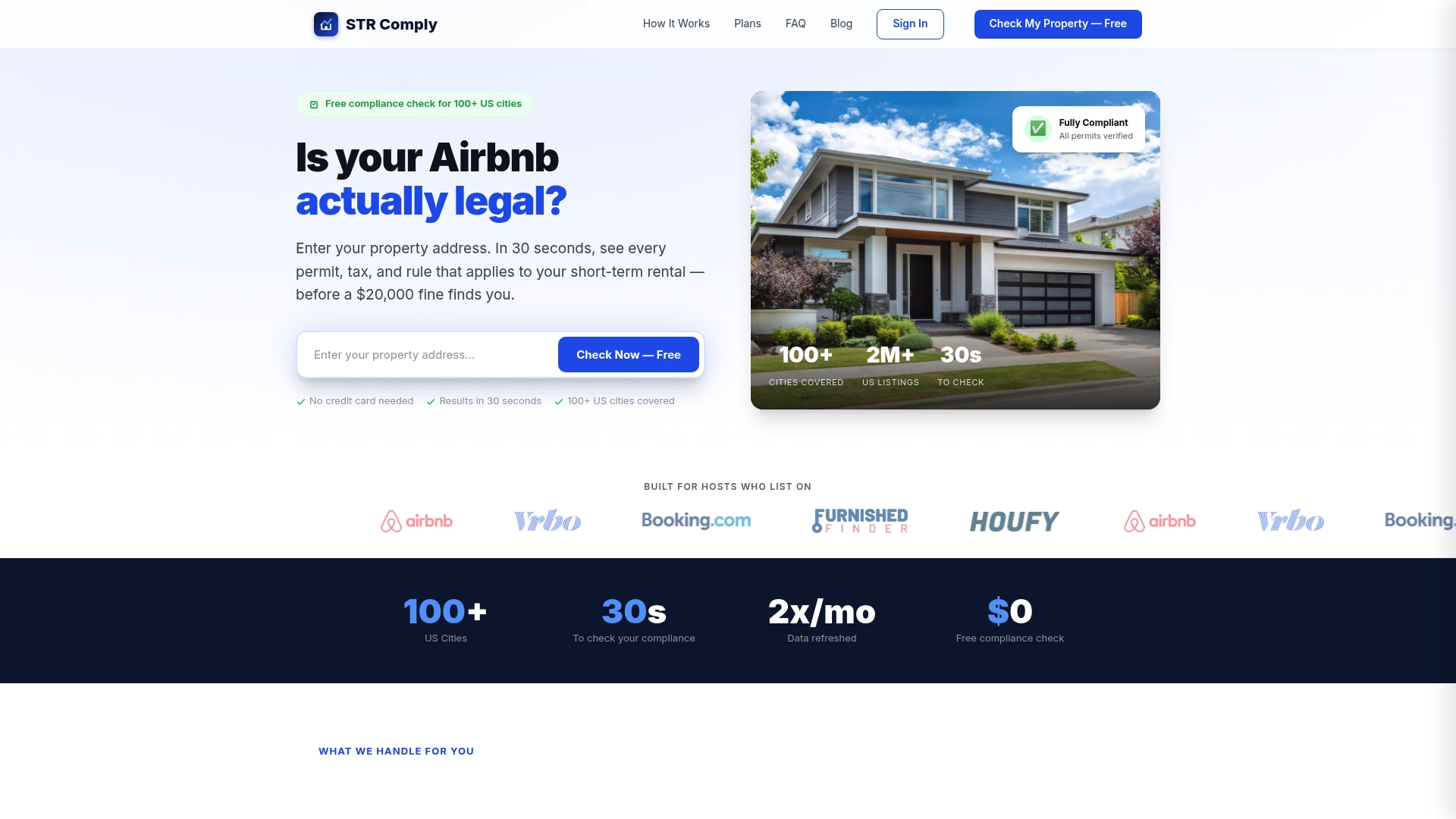
STR Comply is built specifically for hosts and property managers who need fast, accurate answers about compliance in any U.S. market. The free tool lets you check your compliance instantly by entering your property address, generating a detailed summary of permit requirements, tax obligations, zoning rules, and operational restrictions for your specific city. No legal research required. For hosts managing multiple properties, the STR Comply platform offers a full dashboard with permit tracking, renewal alerts, and regulatory update notifications, so nothing slips through the cracks during a busy season. Whether you are launching your first listing or managing a portfolio across multiple states, STR Comply removes the guesswork and replaces it with clear, actionable compliance information.
Frequently asked questions
What is typically required to obtain a short-term rental license in the U.S.?
Most cities require proof of ownership, liability insurance, a local 24/7 contact, floor plans, and a passing safety inspection before issuing a license.
How long does it take to get a rental license approved?
Approval typically takes between 30 and 90 days after a complete application is submitted to the local licensing office.
How do license renewal requirements work for short-term rentals?
Annual renewal is required in most jurisdictions, and renewal fees and updated compliance documentation are typically due before the expiration date.
Are rental license requirements the same in every state?
No, requirements vary widely across states and cities, ranging from permissive frameworks in states like Florida and Arizona to strict night caps and primary residence requirements in California cities.
What happens if a host operates without a required rental license?
Hosts who operate without a valid license risk receiving fines, being forced off booking platforms, and facing legal action from local authorities.
Recommended
Check your city's STR regulations
Free compliance reports for 100+ US cities. Permits, taxes, zoning — all in one place.
Check My Address — Free