
Multi-market rental compliance is defined as the practice of meeting all local regulatory requirements for short-term rental properties across multiple cities or jurisdictions simultaneously. For Airbnb and VRBO hosts managing listings in more than one market, this means tracking different permits, transient occupancy taxes, zoning restrictions, and safety codes for each location. The industry term for this discipline is multi-jurisdictional compliance management. Failing to meet even one jurisdiction’s rules can result in fines, forced de-listing, or legal liability. This guide explains what multi-market rental compliance requires, why it is complex, and how property managers can stay ahead of it.
What is multi-market rental compliance, and why is it complex?
Multi-market rental compliance is the ongoing process of identifying, tracking, and fulfilling every regulatory obligation that applies to short-term rental properties in each city or county where you operate. The complexity comes from one core fact: most regulations vary by locale. Less than half of multifamily regulatory requirements are consistent nationwide. The rest differ sharply by state, county, or city.
Short-term rental hosts face four primary compliance categories in every market they enter:
- Licensing and permits: Most cities require a short-term rental permit or business license. San Francisco, New York City, and Nashville each have separate application processes, fees, and renewal timelines.
- Taxes: Transient occupancy tax rates and filing schedules differ by jurisdiction. Some cities require monthly remittance; others are quarterly.
- Zoning restrictions: Many municipalities limit short-term rentals to owner-occupied properties or ban them in certain residential zones entirely.
- Safety and operational rules: Occupancy limits, smoke detector requirements, noise ordinances, and liability coverage minimums vary city by city.
The enforcement side adds another layer of difficulty. Some cities conduct active inspections; others rely on complaint-driven enforcement. Deadlines for renewals rarely align across markets. A host with listings in Austin, Denver, and Miami faces three separate permit renewal cycles, three different tax schedules, and three distinct sets of operational rules. Manual tracking of these obligations is not just inefficient. It is a direct path to non-compliance.
Pro Tip: Build a master list of every jurisdiction where you operate and note the single most time-sensitive obligation in each one. That list alone will prevent most deadline-related violations.

How do professional property managers handle multi-market compliance?
The most effective framework for managing rental compliance across multiple markets is the hub-and-spoke governance model. This model sets core standards globally and assigns local teams or contacts the responsibility for executing region-specific rules. The hub holds the universal policies; the spokes adapt them to local law.
Operators who apply this model follow a structured process:
- Build a unified obligation inventory. Document every regulatory requirement across all active markets in one centralized register. Include the rule, the jurisdiction, the deadline, and the consequence for non-compliance.
- Separate legal requirements from implementation details. Separating the legal obligation from local execution prevents process drift. The core rule stays stable; only the local procedure changes when regulations shift.
- Assign local accountability. Each market needs a designated point of contact who monitors local regulatory changes and updates the central inventory when rules change.
- Automate deadline notifications. Set automated alerts for permit renewals, tax filing dates, and inspection schedules at least 30 days in advance.
- Conduct quarterly compliance reviews. Review the full obligation inventory every quarter to catch new regulations before they take effect.
Systematic tracking via compliance calendars reduces operator workload by over 90% compared to manual methods. That figure reflects the difference between a spreadsheet-based approach and a centralized, automated system. Manual spreadsheets fail because they depend on one person remembering to check every deadline across every market. Automated systems send the reminder regardless.
Pro Tip: Maintain a “local exception register” as a separate document from your core obligation inventory. It should list every rule that deviates from your standard operating procedure, with the specific city and the reason for the deviation.
What tools and technologies support multi-market compliance?
Technology is the practical backbone of any multi-market compliance program. The right tools reduce manual effort, centralize information, and surface problems before they become violations. Multi-market compliance requires advanced technologies that integrate and automate routine compliance tasks.
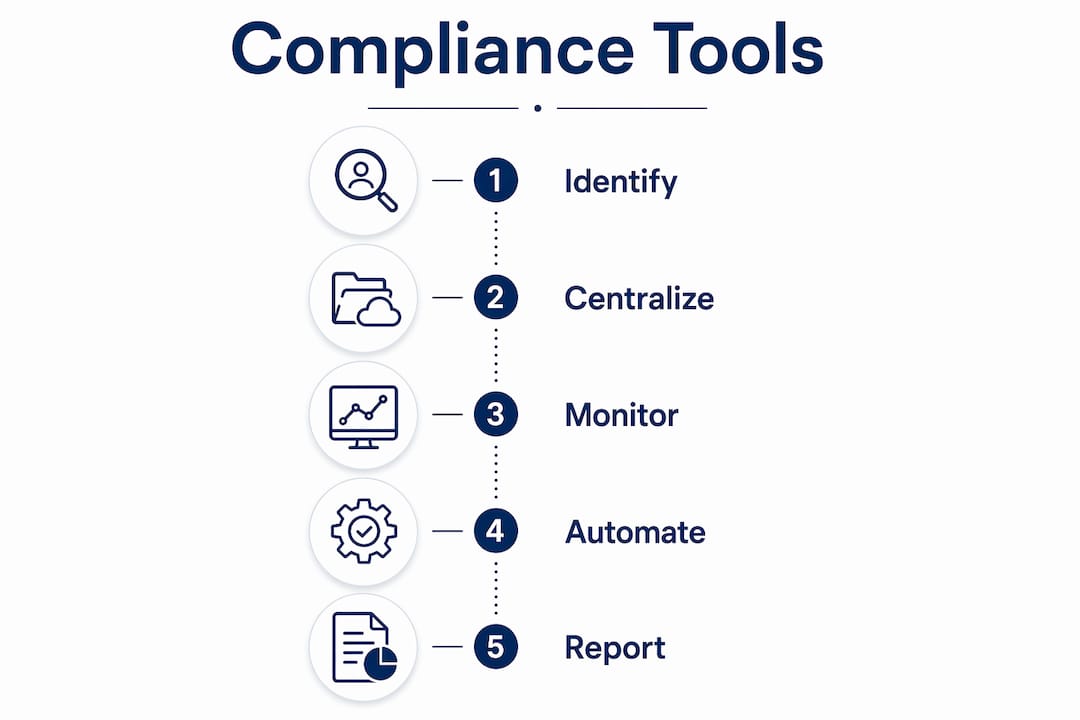
| Tool type | Primary function | Best for |
|---|---|---|
| Compliance calendar systems | Centralize permit renewals, tax deadlines, and inspection dates by city | Hosts managing 3+ markets |
| Real-time regulatory dashboards | Monitor legislative changes and flag new rules as they pass | Property managers with active portfolios |
| Property management systems (PMS) | Integrate compliance tracking with booking, payments, and operations | Full-service property managers |
| Automated alert platforms | Send deadline reminders and renewal notices to designated contacts | Any operator prone to deadline gaps |
A city-by-city compliance calendar centralizes registration deadlines, inspection schedules, and renewal cycles in one place. This is the most efficient method for managing numerous local requirements simultaneously. Without it, each deadline lives in a different email thread, spreadsheet tab, or sticky note.
Digital compliance dashboards offer consolidated views of real-time regulatory status across all locations. They support proactive issue identification rather than reactive scrambling. A dashboard that shows a permit expiring in 14 days gives you time to act. A spreadsheet you forgot to check does not.
Property management systems like Guesty or Hostaway offer compliance hooks that connect permit tracking to listing management. When a permit expires, the system can flag the listing automatically. This kind of integration prevents the common scenario where a host renews a permit but forgets to update the listing status on Airbnb or VRBO.
How should hosts prioritize compliance efforts across markets?
Not every compliance obligation carries the same risk. Prioritizing compliance by risk means concentrating effort where non-compliance causes the greatest harm or penalty. Structured risk assessments help allocate limited time and resources efficiently across jurisdictions.
A practical risk assessment for short-term rental hosts considers two factors: the likelihood of enforcement and the severity of the penalty. High-priority obligations share both characteristics.
- Transient occupancy tax filings: Tax violations carry financial penalties and can trigger audits. Cities like Los Angeles and Chicago actively audit short-term rental operators.
- Permit and license requirements: Operating without a valid permit is the most common cause of de-listing risk on Airbnb and VRBO. Platforms increasingly verify permit numbers before activating listings.
- Data privacy obligations: Some states, including California under the CCPA, impose data handling requirements on businesses that collect guest information. Violations carry statutory fines.
- Safety code compliance: Smoke detectors, carbon monoxide alarms, and occupancy limits are enforced through inspections in many cities. Violations can result in immediate closure orders.
Lower-priority items include aesthetic or operational preferences that local ordinances suggest but do not mandate. Tracking these separately from hard legal requirements keeps your compliance program focused on what actually matters.
Managers should maintain a dedicated local exceptions register to track deviations from core standards efficiently. This register prevents the most common failure mode in multi-market compliance: treating every market as entirely unique and rebuilding your process from scratch each time. Most markets share 80% of the same requirements. The register captures the 20% that differs.
Understanding rental compliance requirements at a structural level makes prioritization faster. When you know the standard categories, you can assess a new market in hours rather than days.
Key Takeaways
Multi-market rental compliance requires a centralized governance framework, risk-based prioritization, and automated tracking tools to manage divergent local regulations without operational failure.
| Point | Details |
|---|---|
| Regulations vary sharply by locale | Less than half of rental regulations are nationally consistent; most differ by city or county. |
| Hub-and-spoke governance works best | Set universal core standards centrally and assign local contacts to manage jurisdiction-specific rules. |
| Compliance calendars cut workload | Systematic tracking reduces administrative burden by over 90% compared to manual spreadsheet methods. |
| Prioritize by risk, not by volume | Focus first on taxes, permits, and safety codes where violations carry the highest penalties. |
| Local exception registers prevent drift | Tracking market-specific deviations separately from core standards keeps your program stable and scalable. |
Why most hosts get multi-market compliance wrong from the start
Most short-term rental hosts I have seen struggle with multi-market compliance make the same mistake: they treat it as a research problem rather than a systems problem. They spend hours reading city ordinances, then store what they find in a spreadsheet that nobody updates. Six months later, a permit has expired and they have no idea.
The real issue is not a lack of information. Cities publish their rules. The issue is that rules change, deadlines recur, and no single person can reliably track all of it manually across five or ten markets. The hosts who stay compliant long-term are the ones who build a system early, before their portfolio grows to the point where the system becomes urgent.
I have also seen operators over-engineer their compliance programs by treating every market as entirely unique. They rebuild their process from scratch for each new city. That approach collapses under its own weight. The smarter path is to identify what 80% of markets have in common, build your core process around that, and use a local exceptions register for the rest. It is a simpler structure, and it actually holds up when you add a new market at 11 p.m. on a Tuesday.
One more thing: technology is not a substitute for knowing your markets. Automated alerts tell you a deadline is coming. They do not tell you that a city council just passed an emergency ordinance changing the permit fee structure. You still need local contacts and a habit of checking regulatory news. The tools handle the routine. You handle the edge cases.
— Jure
How Strcomply simplifies compliance across every market you operate in
Managing permits, taxes, and zoning rules across multiple cities is exactly the problem Strcomply was built to solve.
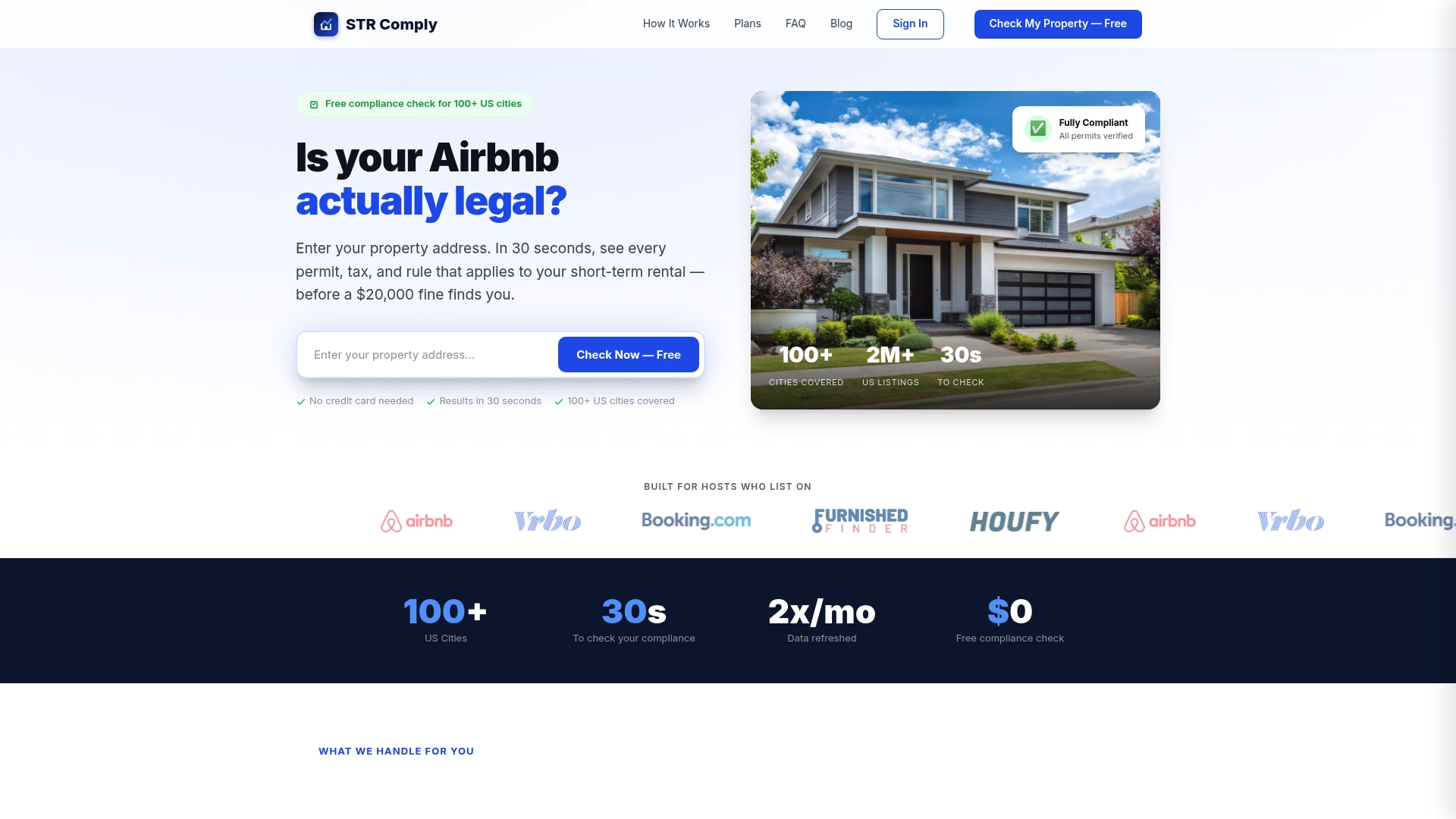
Strcomply gives short-term rental hosts and property managers a free, instant compliance check for any U.S. city. Enter your listing address and get a city-specific summary of permit requirements, transient occupancy tax obligations, and operational restrictions. No legal research required. Paid plans add a full portfolio dashboard with permit tracking, renewal alerts, and real-time regulatory updates. For hosts managing listings across multiple markets, that centralized visibility is the difference between staying compliant and getting caught off guard. Check your compliance status today and see exactly where your listings stand.
FAQ
What is multi-market rental compliance?
Multi-market rental compliance is the practice of meeting all local regulatory requirements for short-term rental properties across multiple cities or jurisdictions at the same time. It covers permits, taxes, zoning, and safety codes that differ by location.
Why do rental regulations differ so much between cities?
Less than half of rental regulations are nationally consistent. Most rules are set at the city or county level, which means permit requirements, tax rates, and occupancy limits vary sharply from one market to the next.
What is the biggest risk of non-compliance for short-term rental hosts?
The most immediate risks are financial penalties, forced removal from platforms like Airbnb and VRBO, and potential legal liability. Operating without a valid local permit is the most common trigger for de-listing.
How can property managers reduce the workload of tracking compliance across markets?
Systematic tracking via compliance calendars and automated alert systems reduces administrative workload by over 90% compared to manual methods. Centralizing all deadlines and obligations in one platform is the most effective approach.
What should hosts focus on first when entering a new market?
Focus first on permit and license requirements, transient occupancy tax registration, and safety code compliance. These three areas carry the highest enforcement risk and the most severe penalties for violations.
Recommended
Check your city's STR regulations
Free compliance reports for 100+ US cities. Permits, taxes, zoning — all in one place.
Check My Address — Free