Running a short-term rental without a solid compliance checklist for hosts is one of the fastest ways to face fines, lose your listing, or have your permit revoked. Regulations are not static. Cities update zoning rules, states pass new safety laws, and platforms change their policies with little warning. This guide walks you through every major compliance area, from permits and taxes to safety equipment and documentation, so you have a repeatable system that protects your rental business no matter how regulations shift.
Table of Contents
- Key takeaways
- Your compliance checklist for hosts: laying the foundation
- Tax compliance: what hosts must handle themselves
- Safety and operational compliance
- Managing your compliance documentation
- Maintaining ongoing compliance
- My honest take on host compliance in 2026
- How Strcomply simplifies your compliance management
- FAQ
Key takeaways
| Point | Details |
|---|---|
| Start with zoning and permits | Verify your property is zoned for short-term rentals before listing and secure all required permits. |
| Know your tax obligations | Register with local tax authorities and track what platforms collect on your behalf versus what you owe directly. |
| Safety compliance is legally required | Install smoke detectors, CO detectors, and fire extinguishers, and document each inspection with dates. |
| Build an evidence pack | Keep all permits, filings, and inspection logs organized so you can respond to audits quickly. |
| Treat compliance as ongoing | Set quarterly reviews to catch regulatory updates before they become violations. |
Your compliance checklist for hosts: laying the foundation
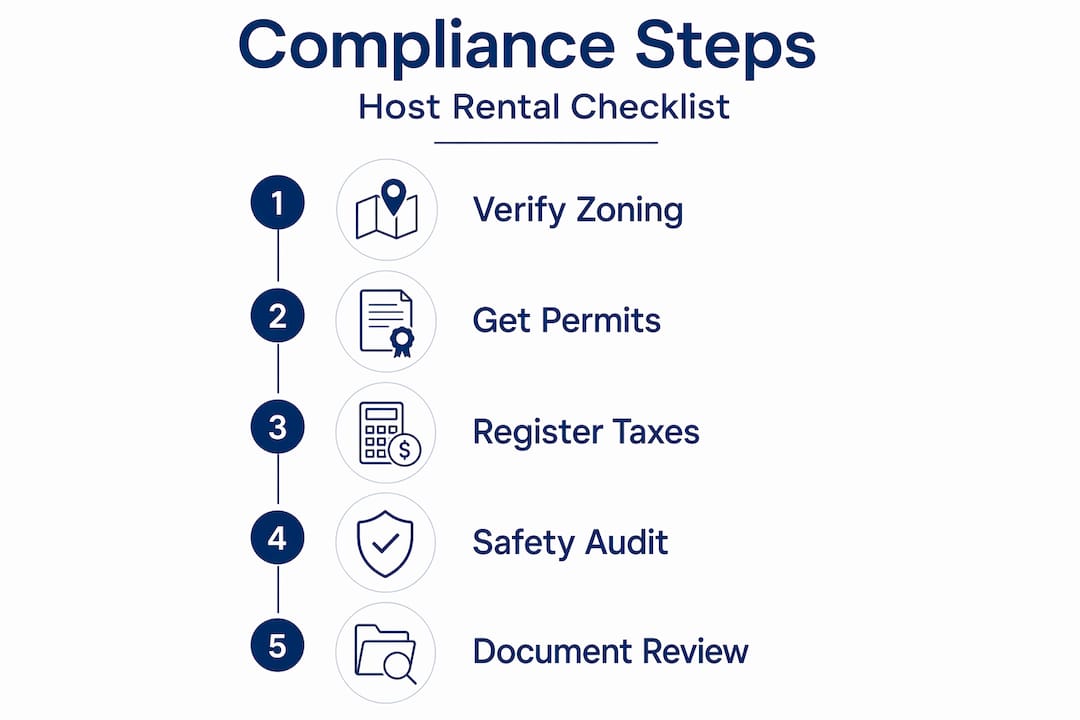
Before you accept a single booking, you need to confirm that your property is legally eligible to operate as a short-term rental. Many hosts skip this step and pay for it later. A thorough STR compliance checklist starts with zoning verification, permit acquisition, and a review of any private restrictions that could override local approval.
Zoning, permits, and private restrictions
Check your municipality’s zoning map to confirm short-term rentals are permitted in your property’s district. Many cities restrict STRs to owner-occupied homes, primary residences only, or specific neighborhoods. Your city’s planning or zoning department is the authoritative source.
Once zoning is clear, secure every required permit and registration. Most jurisdictions require at least one of the following:
| Document type | Typical requirement |
|---|---|
| STR permit or license | Required before operating; often renewed annually |
| Business license | Required in cities that treat rentals as commercial activity |
| Tax registration certificate | Required to collect and remit lodging or occupancy taxes |
| HOA or building approval | Written consent from homeowners’ associations where applicable |
| Zoning compliance letter | Confirms your address is eligible under current zoning rules |
Check with your homeowners’ association, lease agreement, or building management as well. HOA rules and lease clauses can prohibit short-term rentals entirely, even if local zoning permits them. Getting rental registration right early prevents disruption later. Create a physical or digital folder with copies of every document and note renewal dates for each.
Pro Tip: Set a calendar alert 60 days before each permit renewal date. Missing a renewal in jurisdictions like Arlington, Texas can trigger enforcement actions that put your entire operation at risk.
Tax compliance: what hosts must handle themselves
Tax compliance is where many hosts underestimate their legal obligations for hosts. Platforms like Airbnb and VRBO collect and remit certain taxes automatically in many jurisdictions, but not all. Understanding exactly what the platform covers versus what you must handle yourself is non-negotiable.
Here is the core tax checklist for rental hosts:
- Identify every applicable tax in your jurisdiction. These can include transient occupancy tax, hotel tax, lodging tax, or sales tax on accommodations. The transient occupancy tax is one of the most commonly missed obligations for new hosts.
- Register with your state and local tax authorities before your first booking if your platform does not collect on your behalf in your area.
- Confirm monthly what your platform has collected and remitted, and reconcile it against your booking records. Platforms can make errors or leave gaps.
- Keep proof of every remittance. That includes platform-generated tax statements, your own filings, and confirmation receipts from tax authorities.
- File returns on the schedule your jurisdiction requires, which is often monthly or quarterly. Late filings trigger penalties even if you paid the right amount.
For a complete breakdown of 2026 tax obligations by jurisdiction type, review the 2026 host tax guide from Strcomply.
Pro Tip: Create a dedicated folder, digital or physical, labeled by tax year and jurisdiction. Inside it, store every platform tax statement, your filed returns, and any correspondence from tax authorities. If you are ever audited, this folder is the difference between a quick resolution and weeks of document hunting.
Safety and operational compliance
Safety compliance is not optional, and enforcement is getting stricter. Maryland’s STR Safety Act, for example, requires hosts to have specific fire safety equipment in place by October 1, 2026, including smoke alarms, carbon monoxide detectors, a fire extinguisher, and an evacuation diagram. Violations carry criminal misdemeanor penalties, not just fines.
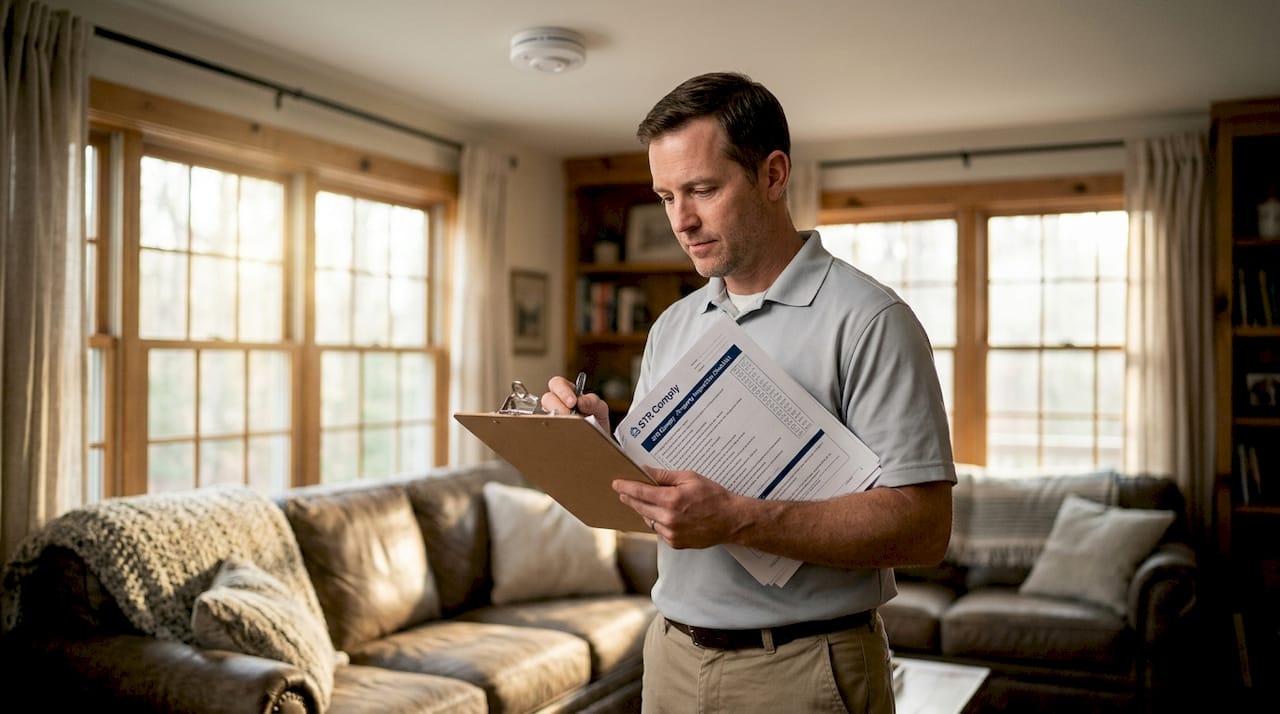
Safety device requirements
Follow this numbered checklist to cover the basics:
- Install smoke detectors on every level of the property and inside each bedroom.
- Install carbon monoxide detectors near sleeping areas, particularly if the property has gas appliances, an attached garage, or a fireplace.
- Place at least one fire extinguisher in an accessible location, typically the kitchen area.
- Post a clear evacuation diagram near the main entrance and in each bedroom.
- List local emergency numbers, including the nearest hospital and non-emergency police line, in a visible location.
- Inspect and test all safety devices before each new guest stay, and log the date and result.
Camera and monitoring policies
Camera placement is a compliance area hosts frequently get wrong. Airbnb banned indoor cameras in all interior spaces as of April 2024, including those that were previously disclosed. Exterior cameras are permitted only with full disclosure to guests and must not capture any private areas. The rule is not just about disclosure. Physical placement matters as much as what you disclose in the listing.
“Compliance includes not only documents but how policies are operationalized with guests, including clear house rules and response systems for complaints.” (Arlington, TX)
Write clear house rules covering maximum guest occupancy, quiet hours, trash disposal instructions, event and party prohibitions, and parking limits. In Arlington, Texas, operating without enforcing these rules has led to permit revocation after two or more citations within a 12-month period.
Pro Tip: Send guests a pre-arrival message that summarizes your house rules and asks for confirmation they have read them. That confirmation creates a timestamped record if a complaint or citation arises.
Managing your compliance documentation
Most hosts think about compliance when they are setting up a new listing and then rarely revisit it. That is a mistake. Regulations change, permits expire, and inspections need to be repeated. Hosts who maintain an evidence pack aligned with audit expectations minimize the time and stress involved in any compliance dispute.
Your compliance evidence pack should cover the following document categories:
| Document category | What to keep | Review frequency |
|---|---|---|
| Permits and licenses | Copies and renewal dates | Before each renewal date |
| Tax filings | Returns filed and confirmation receipts | Monthly or quarterly |
| Insurance certificates | Current policy with liability coverage confirmed | Annually or on renewal |
| Safety inspection logs | Device type, test date, result, next inspection | Before each guest stay |
| Incident reports | Guest complaints, neighborhood complaints, citations | As incidents occur |
| Guest communication | Pre-arrival rule confirmations, complaint responses | Retained per booking |
For a detailed breakdown of which compliance documents to retain, Strcomply offers a dedicated resource for hosts at every stage of their rental operation.
Review your full compliance documentation at least quarterly. Before peak seasons, run a complete audit of every permit, insurance certificate, and tax registration to catch anything that is close to expiring.
Pro Tip: Use a shared cloud folder organized by property address and document category. Add a text file to each folder with expiration dates listed at the top so you see them the moment you open the folder.
Maintaining ongoing compliance
Getting compliant is the first step. Staying compliant is the ongoing discipline that separates professional hosts from those who eventually face enforcement action. Regulations in the short-term rental industry change frequently at the city, county, and state level, and platforms update their policies independently of local governments.
Common compliance mistakes to avoid
- Listing an STR without confirming zoning eligibility first
- Missing platform-specific permit display requirements, such as registration numbers on listing pages
- Relying on a platform to handle all taxes without verifying coverage for your specific city
- Leaving expired permits active in your compliance folder without renewing them
- Placing cameras based on disclosure alone without checking physical field-of-view restrictions
- Ignoring neighbor complaints until they become formal citations
Mismatched registration numbers across listings can trigger automated enforcement. Under the EU’s new framework, which enters application in May 2026, platforms verify registration numbers and remove listings where the number is invalid or inconsistent. This is a data accuracy problem, not just a regulatory one.
Best practices for staying current
- Subscribe to your city’s short-term rental program updates by email if available
- Check platform policy pages at least once per quarter for changes to safety, camera, or tax rules
- Monitor permit and license renewal dates with at least 60 days of advance notice
- Respond to enforcement notices promptly and always attach your compliance evidence when replying
- Review legal penalties for non-compliance annually so you understand what enforcement actually looks like in your market
Day-of operational compliance matters too. Verifying actual guest occupancy, monitoring noise during late hours, and keeping records of these checks can be decisive if a complaint escalates. Arlington’s enforcement shows that documented day-of compliance is often what keeps a permit intact when citations are filed.
My honest take on host compliance in 2026
I’ve worked closely with short-term rental compliance long enough to say with confidence that the hosts who struggle most are not the ones with complex portfolios. They are the ones who treated compliance as a one-time setup task rather than an ongoing operational responsibility.
What I’ve seen repeatedly is that enforcement does not happen the moment a host gets something wrong. It happens months or years later, when multiple small gaps have accumulated into something an inspector or neighbor complaint can act on. A missed permit renewal. A camera that technically violates placement rules. A tax filing that was never sent because the host assumed the platform handled it.
The hosts who avoid this pattern are not doing anything dramatic. They have a calendar with renewal dates, a folder with documents, and a habit of checking for updates quarterly. That is it. The technology has gotten good enough that you do not need a compliance attorney on retainer to manage this well. What you need is a repeatable system that you actually use.
I also think the community angle is underrated. Hosts who maintain good compliance and respond to neighbor concerns professionally tend to face less enforcement scrutiny overall. Compliance is not just about paperwork. It is about operating in a way that your neighborhood and your guests can trust.
— Jure
How Strcomply simplifies your compliance management
Staying on top of permits, taxes, safety requirements, and document renewals across one or more properties is a serious operational load. Strcomply was built specifically to reduce that load for short-term rental hosts and property managers.
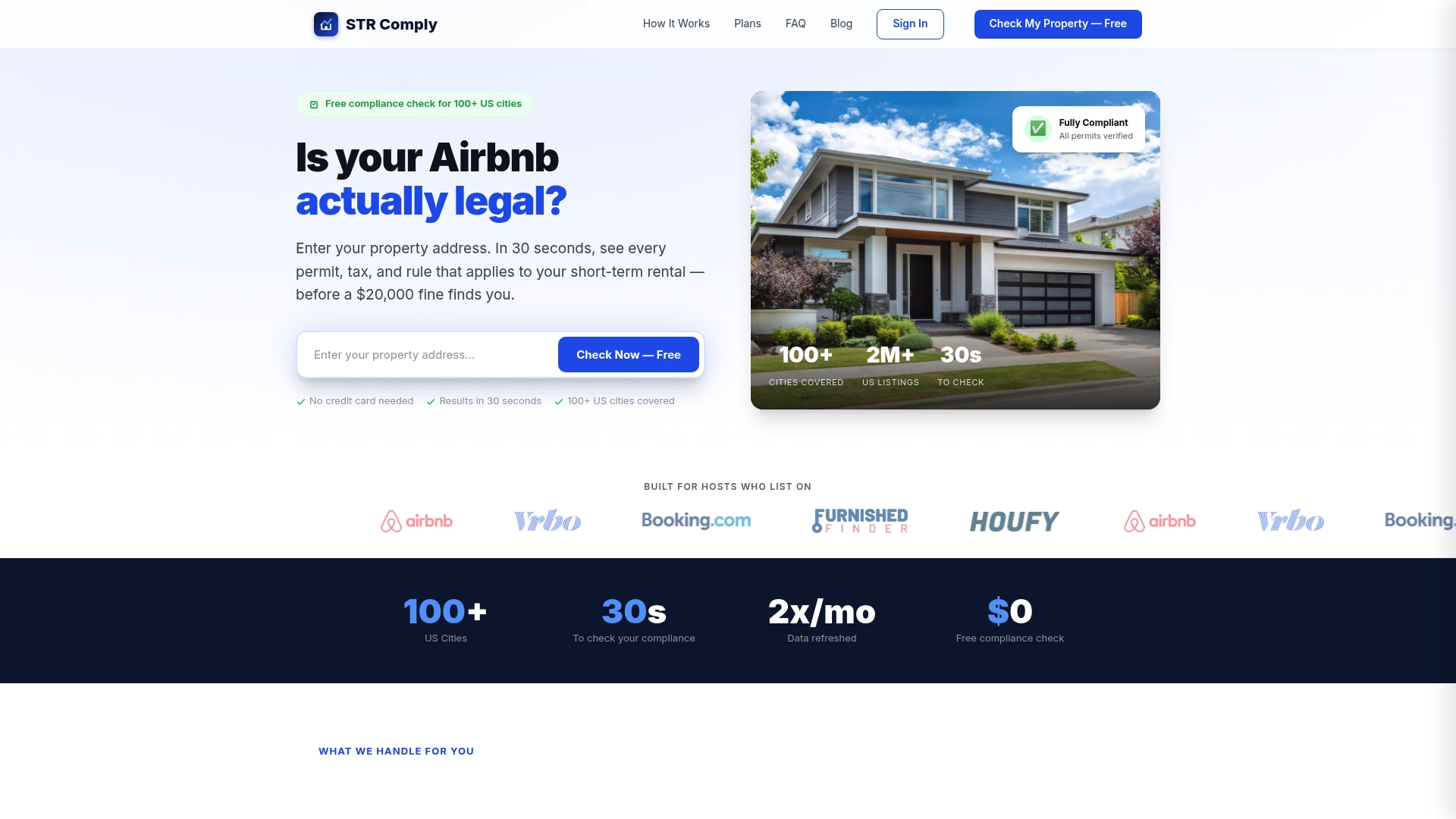
With Strcomply, you can instantly check whether your listing meets local permit, zoning, and tax requirements for your city. The platform generates detailed, city-specific compliance summaries so you are not spending hours on legal research. Paid plans include a full dashboard with permit tracking, renewal alerts, and regulatory update notifications, keeping you audit-ready without constant manual monitoring. Strcomply’s tools also support portfolio-level management for hosts operating in multiple markets. Review the terms of service and get started at strcomply.us to see how the platform fits your compliance workflow.
FAQ
What should a compliance checklist for hosts include?
A complete compliance checklist for hosts should cover zoning verification, STR permits and licenses, tax registration, safety device installation, camera policy compliance, house rules documentation, and organized records of all filings and inspections.
Do platforms like Airbnb collect all required taxes for hosts?
No. Platforms collect and remit taxes in many jurisdictions, but coverage is not universal. Hosts are responsible for identifying any taxes their platform does not handle and filing those directly with local tax authorities.
What are the most common host compliance mistakes?
The most common mistakes include listing without verifying zoning, missing permit renewals, assuming platform tax collection is complete, and placing cameras without checking field-of-view restrictions beyond disclosure requirements.
How often should hosts review their compliance documents?
Hosts should review all compliance documents at least quarterly, and again before each peak season, to catch permit expirations, tax filing deadlines, and any regulatory changes that affect their operation.
What happens if a host fails to comply with local regulations?
Consequences vary by jurisdiction but can include monetary fines, listing removal by the platform, permit suspension, or permit revocation. In Maryland, certain safety violations under HB 1221 carry criminal misdemeanor penalties starting October 2026.
Recommended
Check your city's STR regulations
Free compliance reports for 100+ US cities. Permits, taxes, zoning — all in one place.
Check My Address — Free