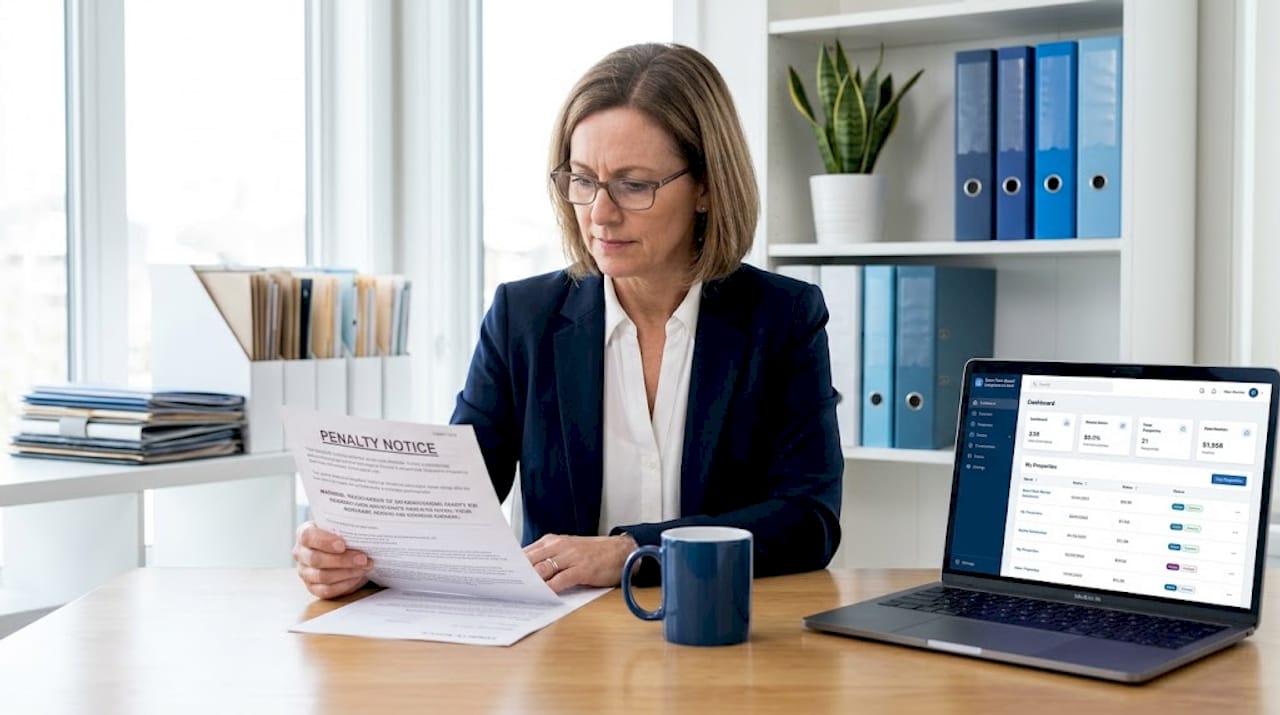
Many short-term rental hosts assume that a solid lease agreement protects them from serious legal trouble. That assumption is costly. Understanding what is a rental legal penalty means recognizing that the rules go well beyond what you write in your contract. Local ordinances, state statutes, and federal regulations all create a web of obligations that can trigger fines, forced shutdowns, and even criminal liability when ignored. This guide breaks down every major category of rental legal penalty, explains the frameworks that govern them, and gives you practical steps to stay compliant in 2026.
Table of Contents
- Key takeaways
- What is a rental legal penalty: definitions and types
- Legal frameworks that govern rental penalties
- Risks and consequences of non-compliance
- Practical strategies to avoid rental legal penalties
- How to respond when facing a rental legal penalty
- My take on compliance after years of watching hosts get burned
- How Strcomply helps you stay ahead of penalties
- FAQ
Key takeaways
| Point | Details |
|---|---|
| Penalties exceed lease terms | State and local statutes override your lease; non-compliant clauses can be void even if both parties signed. |
| Fee enforceability requires documentation | Courts reject punitive flat fees; penalties must reflect actual, documented losses to hold up legally. |
| Non-compliance costs more than fines | Litigation expenses, forced remediation, and listing removal routinely exceed the original fine amounts. |
| Digital records are a legal shield | Timestamped inspection logs and templated notices significantly reduce your litigation risk. |
| Proactive tools reduce exposure | Compliance management platforms help hosts track permits, ordinances, and renewal deadlines before violations occur. |
What is a rental legal penalty: definitions and types
A rental legal penalty is any financial charge, legal sanction, or regulatory consequence imposed on a landlord, host, or tenant for violating the terms of a rental agreement or the laws governing rental activity. This is broader than most hosts realize. Penalties are not simply the late fees printed in your lease. They include government-imposed fines, court-ordered damages, mandatory remediation costs, and in extreme cases, criminal charges.
The distinction between a fee and a penalty matters legally. A fee is a scheduled charge built into a contract. A rental legal penalty often carries statutory authority behind it, meaning a government body has the power to enforce it regardless of what your lease says.
Here are the most common types you will encounter as a host or property manager:
- Late payment fees: Charged when rent or a required deposit arrives after a contractual deadline. Late fees must be reasonable and compensatory, not punitive, and must be clearly stated in the rental agreement to be enforceable.
- Lease violation penalties: Fines triggered by specific breaches such as unauthorized occupants, prohibited activities, or property damage beyond normal wear.
- Illegal unit fines: Penalties imposed by local authorities for renting a property that does not have the required permits, licenses, or certificates of occupancy.
- Habitability violation penalties: Fines resulting from failure to maintain required safety and livability standards, including functioning smoke detectors, structural integrity, and sanitary conditions.
- Transient occupancy tax penalties: Late payment or non-payment of short-term rental taxes can trigger surcharges, interest, and audits from local tax authorities.
- Operating without a permit: Many cities now require a specific STR permit; running a listing without one exposes you to daily fines and potential delisting from platforms.
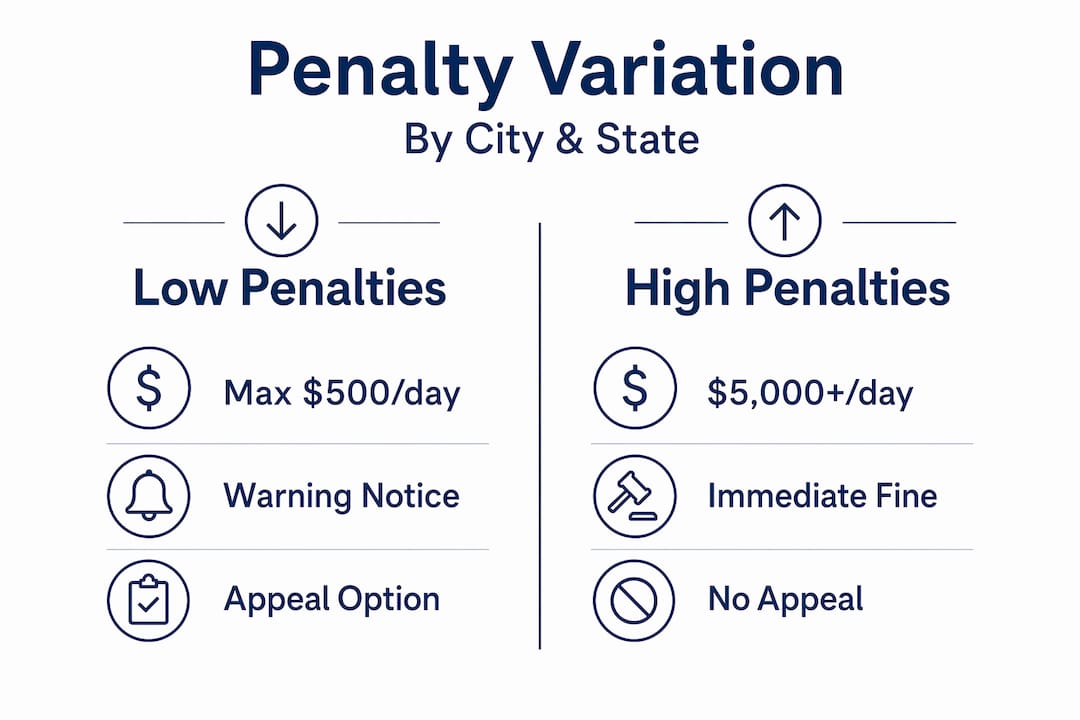
Jurisdictional variation is significant. A fine that is capped at $500 in one city may reach $5,000 per day in another. What counts as an illegal unit in one state may be standard practice elsewhere. This is why understanding the local regulatory environment is the baseline requirement for every host.
Legal frameworks that govern rental penalties
Rental penalties do not exist in a vacuum. They are shaped by an overlapping set of federal, state, and local laws that every host and property manager must understand. The most direct rules come from state landlord-tenant acts, which set the baseline for what penalties are permitted, how they must be disclosed, and what remedies tenants have when landlords overstep.
A critical principle: state and local statutes supersede lease agreements. If your lease includes a penalty clause that conflicts with state law, that clause can be declared void even if your tenant signed it. This is one of the most common and expensive surprises hosts face.
The table below shows how different regulatory layers interact:
| Regulatory level | What it governs | Example |
|---|---|---|
| Federal law | Fair housing, discrimination protections | Cannot charge selective penalty fees based on protected class |
| State statute | Late fee caps, deposit rules, disclosure requirements | Many states cap late fees at 5% of monthly rent |
| Local ordinance | STR permits, zoning, occupancy limits, noise rules | City requires STR permit; fine $1,000/day for operating without one |
| Lease agreement | Specific fee schedules, damage policies | Must conform to all levels above to be enforceable |
Courts generally reject penalty clauses that are not tied to actual damages. The legal standard is liquidated damages, meaning a fee must represent a reasonable pre-estimate of what the landlord actually loses. A flat $2,000 “violation fee” with no cost justification attached is vulnerable to challenge. Fixed early termination fees, for example, are often capped at 2 to 3 months’ rent and courts scrutinize anything beyond that as punitive.
Pro Tip: Review your lease templates against your state’s current landlord-tenant statute at least once per year. Laws update. A clause that was compliant two years ago may now expose you to liability.
Many jurisdictions also have strict rules about security deposits. Deducting legal fees or dispute costs from a tenant’s security deposit is prohibited in most states and can trigger statutory penalties or double-damages claims against the landlord.
Risks and consequences of non-compliance
The spectrum of consequences for rental law violations is wider than most hosts anticipate. At the low end, you face minor administrative fines for paperwork issues. At the high end, you face criminal prosecution, forced property demolition, and complete loss of your rental license. Understanding this spectrum is what separates experienced operators from those who get blindsided.
Here is a ranked view of how consequences escalate:
- Administrative fines: Initial notice of violation with a fine and a remediation deadline. These are recoverable if you act quickly.
- Daily accruing penalties: Failure to remediate within the given window results in fines that accrue each day. Renting an illegal unit can trigger daily fines ranging from hundreds to thousands of dollars depending on the city.
- Forced remediation or closure: Authorities can order you to bring the property into compliance at your expense, or prohibit occupancy entirely until violations are corrected.
- Tenant relocation costs: In some jurisdictions, if a unit is declared uninhabitable, you are legally required to pay for your tenants’ temporary housing.
- Civil lawsuits: Tenants can sue for actual damages, statutory damages, and attorney’s fees when landlords violate tenant protection laws.
- Criminal charges: Extreme habitability violations, repeated non-compliance, or fraud related to permits can escalate to criminal prosecution in certain states.
“Legal compliance is more about protecting your hosting portfolio and reputation than just avoiding fines. The financial fallout from a lawsuit or a delisted property far exceeds what you would have spent maintaining compliance.” — Tenancy Cloud
The less obvious costs are often the most damaging. Litigation expenses, including attorney fees and court costs, can easily reach tens of thousands of dollars for a dispute that started as a $500 fine. Platform delisting from Airbnb or VRBO while a legal dispute is pending can eliminate months of revenue. Reputational damage in a local market where neighbors and local authorities are watching is nearly impossible to quantify but very real.
Documentation is your first line of defense. Hosts who maintain records of inspections, communications, and disclosures are significantly better positioned in disputes than those who relied on verbal agreements or informal practices.

Practical strategies to avoid rental legal penalties
The goal is not to react to violations. The goal is to build a compliance system that makes violations unlikely in the first place. Experienced property managers treat compliance as an operational function, not an afterthought.
- Draft lease agreements with enforceable penalty language. Every fee or penalty clause must reference what actual cost it compensates. Vague language invites legal challenges. Fees must reflect actual costs and be documented with invoices or time logs to withstand scrutiny.
- Obtain and maintain required permits. Understand what rental license requirements apply in every market where you operate. Permit requirements change frequently, especially in high-demand STR cities.
- Stay current on local STR ordinances. Regulations covering occupancy limits, noise curfews, parking rules, and operational restrictions vary widely by city and update regularly. What was allowed last year may require a new permit this year.
- Conduct and document regular inspections. Habitability violations often start small. A documented inspection schedule with written records creates an evidence trail and reduces litigation risk significantly.
- Comply with all tax obligations. Transient occupancy taxes, local tourism levies, and state sales taxes on short-term rentals each have their own filing deadlines and penalty structures. Understand your local STR tax obligations before your first guest checks in.
- Use digital audit trails. Timestamped communications, electronic signed disclosures, and standardized inspection checklists are increasingly expected by courts and regulators as proof of good-faith compliance.
Pro Tip: Do not rely solely on platform terms of service for compliance guidance. Airbnb and VRBO require you to follow local laws independently. A listing that passes platform review can still violate city ordinances.
How to respond when facing a rental legal penalty
Receiving a penalty notice is stressful, but how you respond in the first 72 hours often determines how the situation resolves. Hosts who react without a clear plan tend to make statements or take actions that complicate their position.
Start with a full assessment of the claim. Read the penalty notice carefully, noting the specific violation cited, the governing statute or ordinance referenced, and the response deadline. Do not assume the notice is accurate. Authorities make procedural errors, and violations are sometimes cited at the wrong address or under outdated codes.
Gather documentation immediately. Pull your inspection records, permit confirmations, lease agreements, and any written communications relevant to the alleged violation. If you have digital compliance records with timestamps, organize them chronologically before contacting anyone.
Communication comes next, and it should be measured. If the penalty involves a tenant dispute, respond in writing, keep the tone professional, and avoid admissions of fault before you have reviewed all the facts. If the notice comes from a local authority, your response should be equally professional and specifically address the cited violation rather than general grievances.
Seek legal advice before the response deadline expires. An attorney with experience in landlord-tenant law or local STR regulations can often identify procedural defects in a penalty notice or negotiate a reduction. The cost of a legal consultation is almost always less than the cost of a poorly handled response.
Avoid two common mistakes that consistently worsen outcomes. First, ignoring a notice does not make it go away. Deadlines exist, and missing them converts a manageable fine into an escalating daily penalty. Second, attempting to pass legal or dispute costs on to tenants through security deposit deductions is often illegal and creates a second violation on top of the first.
My take on compliance after years of watching hosts get burned
I’ve watched hosts lose thousands of dollars not because they broke the law deliberately, but because they assumed compliance was someone else’s problem. They thought the platform handled it. They thought their lease agreement was enough. They found out otherwise at the worst possible moment.
What I’ve learned is that compliance is not a one-time setup task. It is an ongoing operational responsibility. Cities change their STR ordinances with little warning. States update landlord-tenant statutes regularly. A lease that was legally sound in 2022 may carry unenforceable clauses today because state laws override lease agreements and those laws have evolved.
The hosts who sleep well are the ones who treat their rental operation like a legitimate business. They track permits. They document inspections. They review their leases annually. They do not wait for a penalty notice to ask what the rules are. That kind of proactive management is not just about avoiding fines. It protects your portfolio, your reputation, and your ability to keep operating for the long term.
— Jure
How Strcomply helps you stay ahead of penalties
Running a compliant short-term rental operation across multiple markets is a real challenge. Regulations vary by city, update frequently, and the cost of missing a deadline is high. Strcomply is built specifically for this problem.
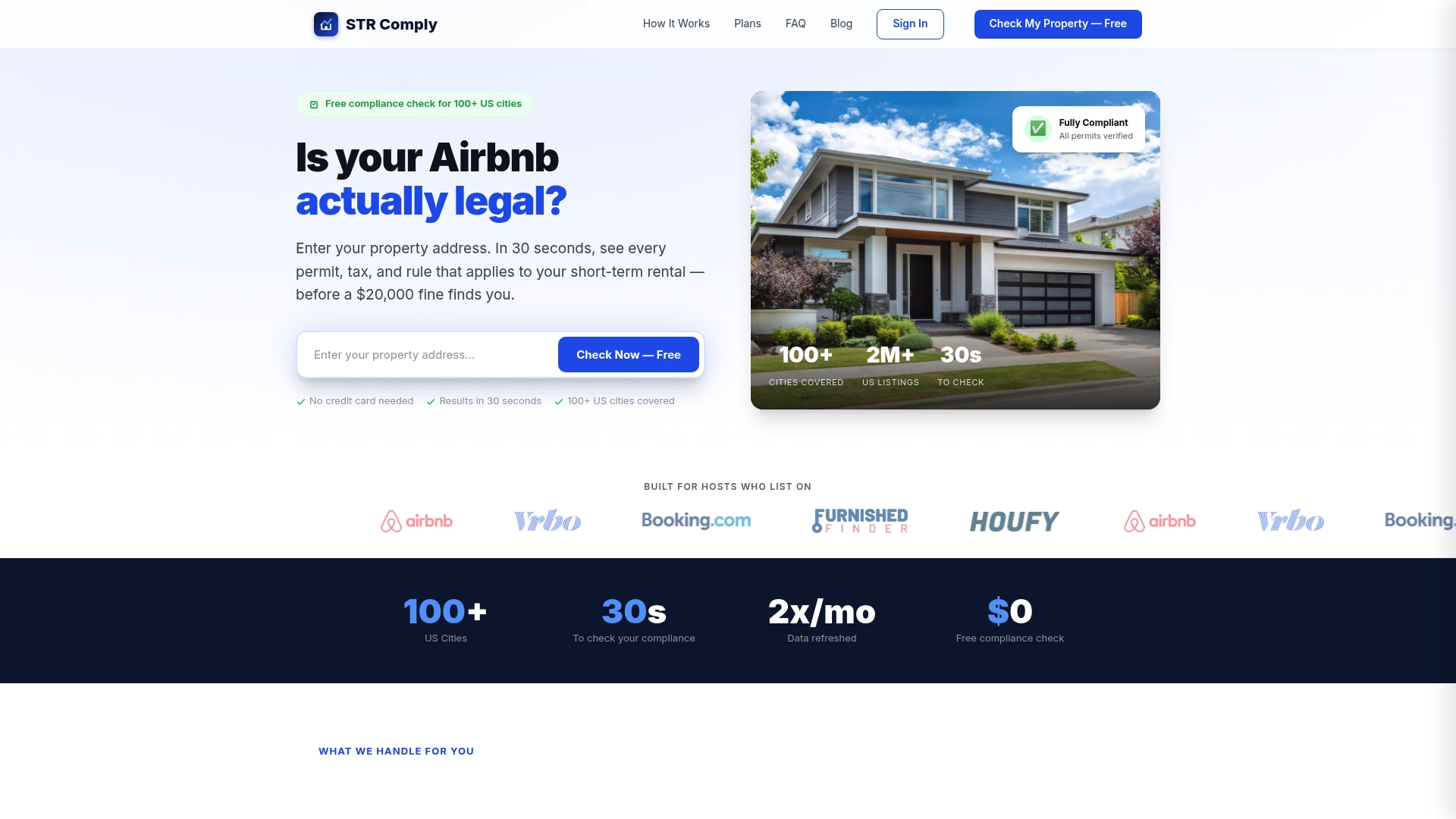
The platform gives hosts and property managers a free, instant compliance check that covers permits, tax obligations, zoning rules, and operational restrictions for their specific listing location. Paid plans go further, with a portfolio dashboard, permit tracking, renewal alerts, and real-time regulatory updates so you know exactly when rules change in the markets you operate. Before you incur a rental legal penalty that costs more to fight than it does to prevent, review the Strcomply terms and platform details and check whether your listings are fully compliant today.
FAQ
What is a rental legal penalty?
A rental legal penalty is a financial charge or legal consequence imposed on a landlord, host, or tenant for violating rental laws or a lease agreement. Penalties can be issued by government authorities, courts, or arise from contractual breach, and they often carry more legal weight than standard contract fees.
Can my lease override state rental penalty rules?
No. State and local statutes supersede lease agreements, meaning penalty clauses in your contract that conflict with state law can be declared void and unenforceable even if both parties signed the lease.
What are rental fines for operating without an STR permit?
Operating a short-term rental without the required permit can result in daily fines ranging from hundreds to thousands of dollars, forced closure of the unit, and in repeat cases, criminal charges depending on the jurisdiction.
How can I make sure my lease penalties are enforceable?
Courts require that penalty clauses reflect actual costs and represent a reasonable estimate of real losses. Document your costs with invoices or records, and avoid flat fees that cannot be justified by documented damages.
What should I do if I receive a rental penalty notice?
Read the notice carefully, gather all relevant documentation, and respond before the stated deadline. Seek legal advice promptly, since missing deadlines can cause fines to escalate daily, and never ignore a formal notice from a regulatory authority.
Recommended
Check your city's STR regulations
Free compliance reports for 100+ US cities. Permits, taxes, zoning — all in one place.
Check My Address — Free