
A zoning permit is a local government authorization confirming that a proposed land use or activity complies with zoning laws at a specific parcel. It is not a building permit, and it is not a business license. Before you break ground, add a rental unit, or change how a property is used, a zoning permit is the first official gate you must pass through. Property owners and short-term rental hosts who skip this step face fines, forced removal of improvements, and potential delisting from platforms like Airbnb and VRBO.
What is a zoning permit and what does it cover?
A zoning permit authorizes a defined use at one specific address. That authorization does not transfer to other properties, even if the activity is identical. Zoning rules determine what can be built and where, regulating land use location and compatibility with local plans. Every city, county, and township applies its own zoning code, which divides land into districts: residential, commercial, industrial, mixed use, and others.
What a zoning permit actually covers depends on the district and the proposed use. Common covered elements include:
- Permitted use: Whether the activity (single-family dwelling, short-term rental, retail shop) is allowed in that zone
- Setbacks: Minimum distances from property lines, roads, and neighboring structures
- Building height and footprint: Maximum size and coverage of structures on the lot
- Parking requirements: Number of spaces required for the use type
- Accessory structures: Sheds, pools, fences, and detached garages that must meet zone-specific rules
A zoning permit is distinct from a building permit. Zoning permits authorize use and land development in line with zoning codes, while building permits ensure construction safety and code compliance. The two serve different purposes and follow a specific sequence: zoning approval typically comes first.
When do you need a zoning permit?

The trigger for a zoning permit is any change in land use, structure, or intensity of activity. Waterbury, VT requires zoning permits for changes of use, additions, or new construction, but exempts minor projects with no expansion or parking impact. That exemption is narrow. Most property owners underestimate how quickly a project crosses the threshold.
Common scenarios that require a zoning permit include:
- Converting a single-family home into a two-family dwelling
- Adding an accessory dwelling unit (ADU) or in-law suite
- Building a detached garage, pool, or fence above a certain height
- Operating a home-based business or short-term rental
- Expanding a commercial building’s footprint or changing its use category
- Installing a new driveway or parking area that changes traffic patterns
Even minor projects can trigger zoning permit requirements if they change the use or intensity of the property, such as adding new occupants or modifying parking. This surprises many property owners who assume small physical changes fall below the radar.
Pro Tip: Before starting any project, call your local zoning office and describe the work in plain terms. Ask directly whether a zoning permit is required. Get the answer in writing or by email. That one step can save months of delays and thousands of dollars in fines.
Short-term rental hosts face a specific version of this challenge. Operating an Airbnb or VRBO listing in a residentially zoned area often constitutes a change in use from a standard dwelling to a transient occupancy use. Many municipalities now treat short-term rentals as a separate use category requiring their own zoning permit requirements and registration.
How does the zoning permit process work?
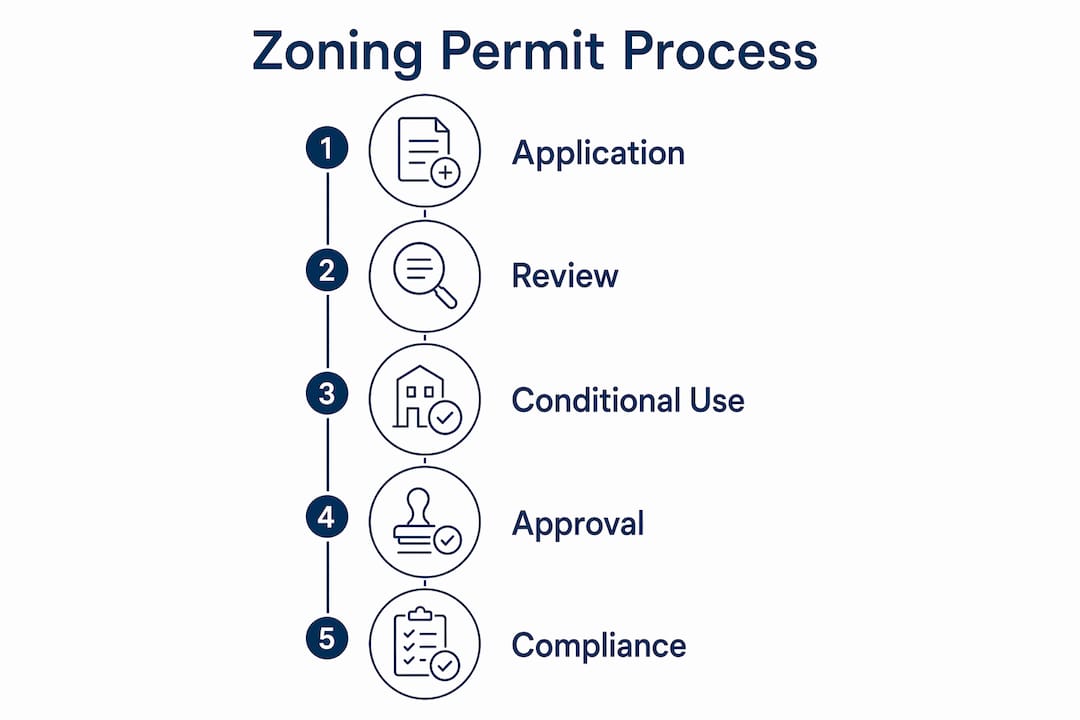
The zoning permit process follows a consistent pattern across most U.S. jurisdictions, though timelines and fees vary. The City of Toledo, for example, issues a Certificate of Zoning Compliance that must be approved before any building permit application can proceed. That sequencing is standard in most cities.
A typical zoning permit application process looks like this:
- Determine the zoning district. Look up your parcel on the local government’s zoning map. Confirm the district classification and the list of permitted uses.
- Prepare a site plan. Most applications require a scaled drawing showing property boundaries, existing structures, proposed changes, setbacks, and parking. Accuracy matters here.
- Complete the application form. Local planning or zoning departments provide forms online or at the office. Include project details: size, height, materials, and intended use.
- Pay the application fee. Fees vary widely by jurisdiction and project scope. Some cities charge a flat fee; others base it on project value or square footage.
- Submit and wait for staff review. Zoning staff review the application against the local zoning code. They check use classification, setbacks, height limits, and compatibility with adjacent uses.
- Respond to revision requests. Staff may request additional information or plan revisions. Responding quickly keeps the timeline on track.
- Receive approval or denial. Approved permits are issued with conditions. Denied applications may be appealed or revised for resubmission.
Zoning permits act as gating documents before other department approvals, meaning delays in zoning review can postpone the entire project schedule. A complete, accurate application on the first submission is the single most effective way to avoid delays.
Pro Tip: If your proposed use is not permitted by right in the zoning district, you will need to apply for a conditional use permit or zoning variance. This relief process can take several months and requires a public hearing. Factor that timeline into your project plan before signing a purchase contract or lease.
Starting construction before permit approval is the most common and costly mistake property owners make. Violations can result in stop-work orders, mandatory demolition, and fines that exceed the cost of the original permit.
Zoning permits vs. building permits vs. zoning verification letters
These three documents are frequently confused, and mixing them up causes real compliance problems. Each serves a distinct purpose at a different stage of a project or transaction.
| Document | Purpose | When it is used | Who issues it |
|---|---|---|---|
| Zoning permit | Authorizes a specific land use or activity at a parcel | Before construction or change of use begins | Local zoning or planning department |
| Building permit | Confirms construction meets safety and building codes | After zoning approval, during construction | Local building department |
| Zoning verification letter | Confirms current zoning district and permitted uses | During real estate due diligence, refinancing, or sale | Local zoning or planning department |
Zoning verification letters verify zoning district and permitted uses, used mainly in due diligence such as purchases or refinancing. They do not authorize any changes. A buyer using a zoning verification letter to confirm a property’s current status still needs a zoning permit before modifying or operating a new use. Lenders and title companies often request these letters, but they carry no operational authority.
Certificates of occupancy and conditional use permits add further layers. A certificate of occupancy confirms a completed building is safe for its intended use. A conditional use permit grants approval for a use that is allowed in a zone only under specific conditions. Understanding where each document fits prevents costly missteps, especially for property managers navigating permits across multiple properties.
Tips for navigating zoning permit requirements for real estate and short-term rentals
Property owners who approach zoning permits proactively avoid the most common and expensive problems. These practices apply whether you are developing a new property, renovating an existing one, or launching a short-term rental.
- Research zoning before you buy. Confirm the zoning district and permitted uses for any property before closing. A property zoned for single-family residential use may prohibit short-term rentals entirely.
- Contact the zoning office early. Zoning staff can tell you whether your intended use is permitted by right, conditional, or prohibited. This conversation costs nothing and can redirect your plans before you invest.
- Prepare complete documentation. Incomplete site plans are the leading cause of application delays. Include all required dimensions, setbacks, and use descriptions on the first submission.
- Understand conditional use requirements. If your use requires a conditional use permit, attend the public hearing prepared with neighbor support letters and a clear presentation of your project’s compatibility with the neighborhood.
- Track permit renewals and conditions. Many zoning permits for short-term rentals require annual renewal and ongoing compliance with operational conditions such as occupancy limits, noise rules, and parking requirements.
- Stay current on local ordinance changes. Zoning codes change. A use permitted today may be restricted or prohibited next year. Vacation rental permit requirements shift frequently across U.S. cities, and hosts who miss updates face retroactive compliance obligations.
For short-term rental hosts specifically, zoning compliance is not a one-time task. It is an ongoing obligation tied to local ordinance updates, permit renewals, and operational restrictions that vary by city and sometimes by neighborhood.
Key Takeaways
A zoning permit is the foundational authorization that determines whether your intended land use is legally allowed before any construction or operational permit can follow.
| Point | Details |
|---|---|
| Zoning permit defined | A local government authorization confirming a proposed use complies with zoning laws at a specific parcel. |
| Sequencing matters | Zoning approval must come before building permits; skipping this step causes stop-work orders and fines. |
| Short-term rentals need permits | Operating an Airbnb or VRBO listing often triggers zoning permit requirements as a change of use. |
| Verification letters differ | Zoning verification letters confirm current zoning status but do not authorize any changes or new uses. |
| Ongoing compliance required | Many zoning permits require annual renewal and adherence to operational conditions after initial approval. |
What I have learned from watching property owners get this wrong
Most zoning permit problems are not caused by bad intentions. They are caused by timing. Property owners assume they can start work and sort out permits later, or they confuse a zoning verification letter with actual authorization to operate. I have seen short-term rental hosts invest heavily in furnishing and listing a property, only to discover the zoning district prohibits transient occupancy entirely. The financial loss is real, and it is entirely avoidable.
The other pattern I see repeatedly is underestimating the conditional use process. When a use is not permitted by right, the public hearing process can take three to six months in many jurisdictions. That timeline is not a bureaucratic inconvenience. It is a hard constraint that should shape your purchase timeline, your financing, and your launch date. Property owners who treat zoning as an afterthought consistently face the steepest costs.
My honest advice: treat zoning research as the first line item in any property project budget, not the last. A $200 pre-application meeting with a zoning official can prevent a $20,000 compliance problem. And if you are operating or planning to operate short-term rentals across multiple markets, manual tracking of local ordinances is not a realistic option. The rules change too frequently and vary too widely by city.
— Jure
How Strcomply simplifies zoning and permit compliance
Property owners and short-term rental hosts managing compliance across multiple markets need more than a checklist.
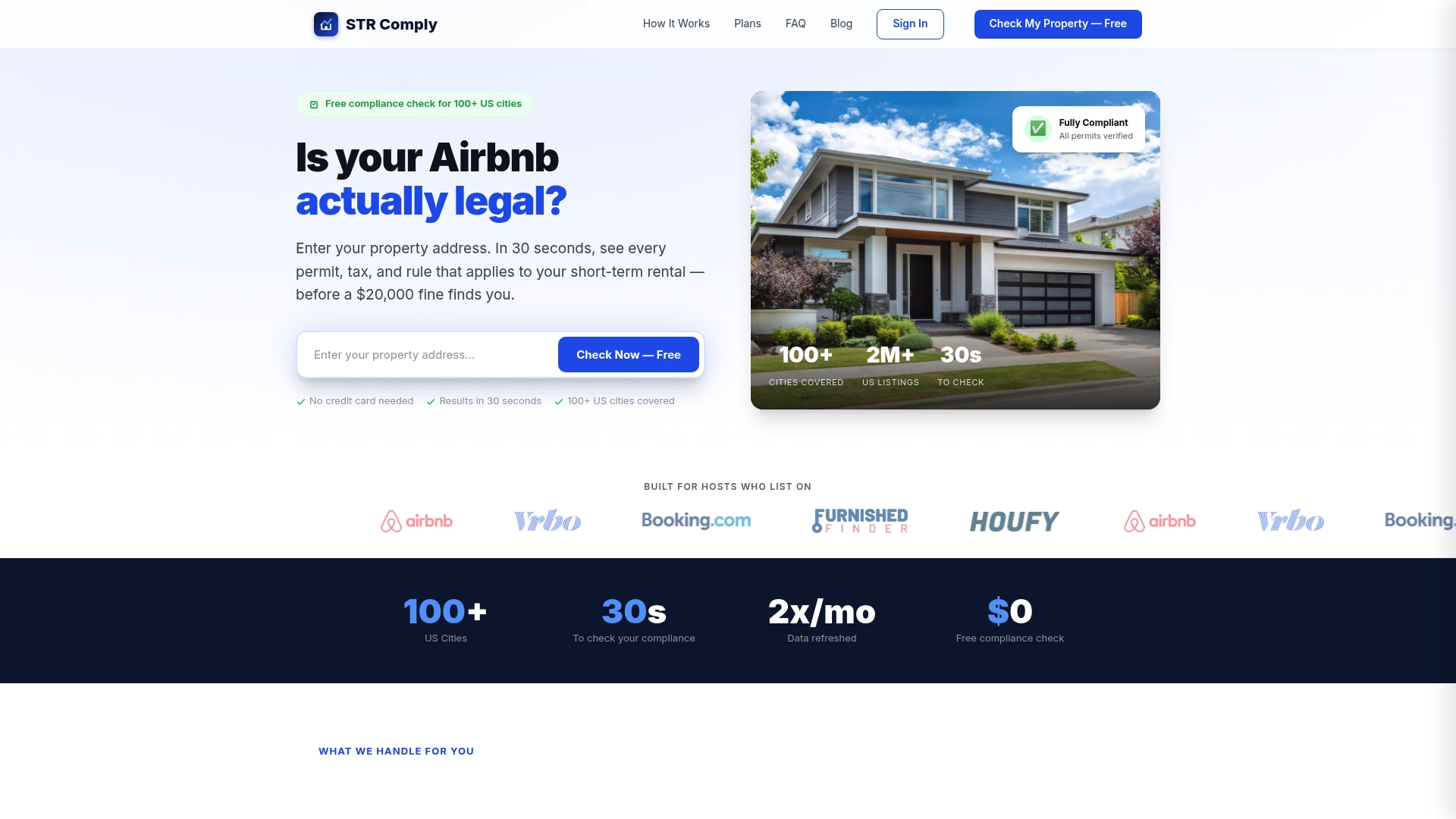
Strcomply is a compliance platform built specifically for Airbnb, VRBO, and short-term rental hosts across the United States. The platform provides instant, city-specific compliance summaries covering zoning and permit obligations, tax requirements, and operational restrictions. Paid plans include permit tracking dashboards, renewal alerts, and real-time regulatory updates so you never miss a deadline or a rule change. For hosts managing properties in multiple cities, Strcomply replaces hours of legal research with a single, reliable source of current compliance information.
FAQ
What is a zoning permit used for?
A zoning permit authorizes a specific land use or activity at a property, confirming it complies with local zoning laws. It is required before construction, change of use, or new operational activities begin.
Is a zoning permit the same as a building permit?
No. A zoning permit confirms that a proposed use is allowed under local zoning codes, while a building permit confirms that construction meets safety and structural standards. Zoning approval typically must come before a building permit is issued.
Do short-term rentals require a zoning permit?
Operating a short-term rental often constitutes a change of use from a standard residential dwelling, which triggers zoning permit requirements in many U.S. cities. Requirements vary by municipality, so confirm with your local zoning office before listing.
How long does the zoning permit process take?
Standard zoning permit applications are reviewed within a few days to several weeks, depending on the jurisdiction and application completeness. Uses requiring conditional approval or a public hearing can take several months.
What happens if you skip a zoning permit?
Operating without a required zoning permit can result in stop-work orders, mandatory removal of improvements, fines, and denial of future permit applications. Short-term rental hosts also risk delisting from platforms like Airbnb and VRBO.
Recommended
Check your city's STR regulations
Free compliance reports for 100+ US cities. Permits, taxes, zoning — all in one place.
Check My Address — Free